


Board and Train vs. Private Dog Training: Which Is Better for Your Dog?

Choosing between board and train and private dog training can feel difficult because both can be effective when they match the dog, the owner, and the training goal. The real question is not which program is universally better. It is which approach gives your dog the right learning environment while giving you the skills needed to maintain progress at home.
For dog owners considering professional dog training in North Las Vegas, understanding how these two formats differ can help you make a confident, realistic decision.
Quick Answer:
Board and train may be a good fit for owners who want an intensive, structured training period with a professional. Private dog training is often better when the owner needs hands-on coaching or when problems happen mainly at home. In either case, long-term success depends on consistency after professional training ends.
What Is Board and Train Dog Training?
A board and train program is a residential dog training program in which your dog stays with a trainer or at a training facility while receiving regular professional instruction. Programs may focus on basic obedience, manners, leash skills, impulse control, or specific behavioral goals.
The American Kennel Club notes that these programs commonly involve dogs staying with trainers for an extended training period. It also emphasizes that owners still need to continue the training because dogs may not automatically apply skills learned in one environment to every situation at home.
Kings Corner Dog Trainer LLC currently offers board and train services in North Las Vegas, along with several other professional training options.
Board & Train Services
Pros of Board and Train
- Provides a focused training environment
- Allows for frequent practice with a professional dog trainer
- Can help establish a strong foundation for obedience
- May suit busy owners who cannot initially provide intensive daily training
- Gives trainers more opportunities to observe patterns in a dog’s behavior
Limitations of Board and Train
- Owners are not present for every training session
- Dogs may behave differently after returning to their normal environment
- Owners still need to learn and reinforce the training
- Results depend heavily on the quality and methods of the trainer
- It should not be viewed as a permanent “quick fix”
One of the biggest mistakes owners make is assuming their dog will return home completely trained forever. Dogs learn through repetition, reinforcement, and context. Skills developed during board and train must continue to be practiced in the environments where the dog actually lives.
What Is Private Dog Training?
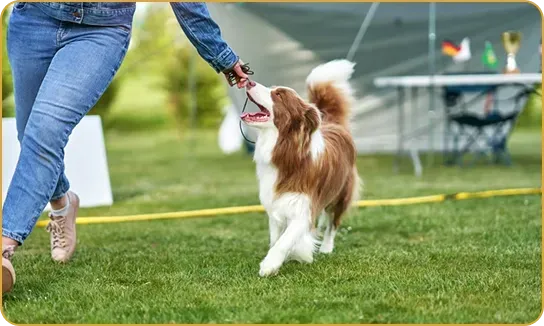
Private dog training involves personalized sessions between a trainer, the dog, and usually the owner. Training may happen at a facility, outdoors, or inside the owner’s home.
With in-home dog training, a trainer can see the dog’s actual environment and work directly on problems such as jumping on visitors, excessive barking, leash pulling, or household manners. Kings Corner’s in-home program provides one-on-one guidance and customized training based on the dog’s environment and household needs.
In-Home Dog Training
Pros of Private Training
- Gives owners direct, hands-on coaching
- Focuses sessions on individual priorities
- Allows training in the dog’s everyday environment
- Helps owners understand timing, cues, and reinforcement
- Makes it easier to adjust the plan as new challenges appear
Limitations of Private Training
- Owners must practice consistently between sessions
- Progress can depend on the household’s follow-through
- Training is generally less intensive between appointments
- Busy schedules may make consistent practice difficult
Board and Train vs. Private Dog Training: Key Differences
| Factor | Board and Train | Private Dog Training |
|---|---|---|
| Training environment | Trainer’s environment | Home or agreed training location |
| Owner involvement | Lower during initial training | High throughout training |
| Training intensity | Usually more concentrated | Spread across individual sessions |
| Best for | Structured skill development | Personalized owner-and-dog coaching |
| Home-specific problems | May require transition practice | Can be addressed directly |
| Owner education | Essential at handoff | Built into each session |
| Daily responsibility | Trainer initially | Owner throughout |
| Long-term practice | Required | Required |
Which Training Method Is Better for Your Dog?
The best choice depends on the problem you are trying to solve.
Consider Board and Train When:
Your dog may benefit from board and train when you want a concentrated period of structured professional training and are prepared to continue the work after your dog returns home.
For example, imagine a young dog that needs better leash manners, impulse control, reliable obedience, and a consistent routine. An intensive program may help establish those skills, provided the owner receives clear instructions for maintaining them.
Consider Private Training When:
Private dog training may be the stronger choice when the behavior is closely connected to you, your household, or your dog’s normal environment.
A dog that jumps whenever guests enter, barks at a specific window, pulls only on neighborhood walks, or ignores certain family members may benefit from one-on-one dog training where the trainer can observe the real situation.
Consider a Combination Approach
The decision does not always have to be board and train vs. private dog training.
For many dogs, a combined approach can make sense:
- Use intensive professional training to establish skills.
- Complete owner-transfer sessions.
- Continue with private follow-up training.
- Practice skills in different real-world environments.
This approach addresses one of the most important parts of dog training: transferring skills from the trainer to the owner and from one environment to another. The AKC specifically emphasizes the importance of owner education and continued reinforcement after residential training.
What About Dogs With Behavioral Problems?
Not every behavioral issue is simply an obedience problem.
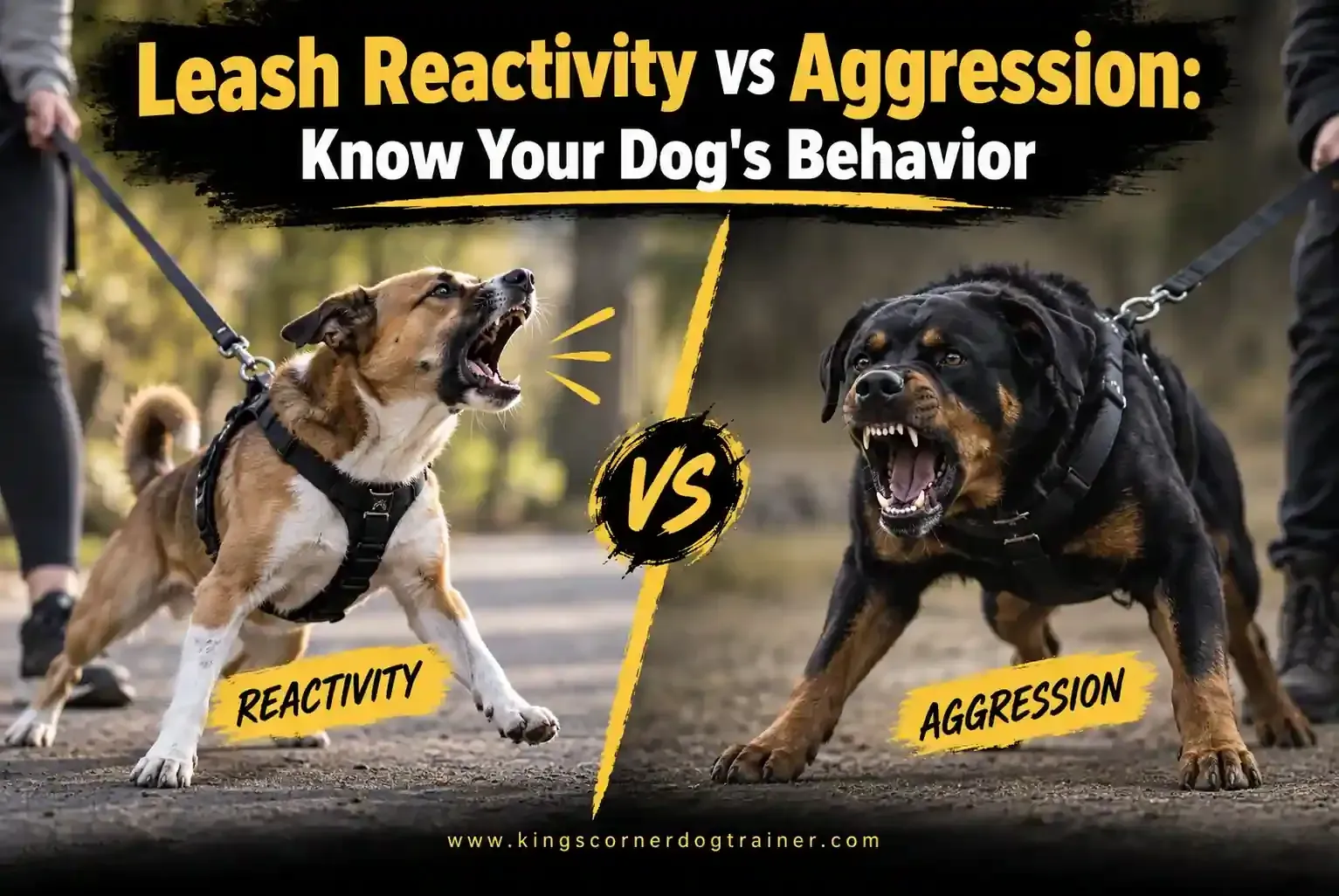
Fear, anxiety, reactivity, excessive barking, destructive behavior, and aggression may require a carefully individualized behavior modification plan. Kings Corner Dog Trainer LLC offers behavioral modification services in North Las Vegas and describes its approach as customized, with an emphasis on positive reinforcement, patience, consistency, and understanding individual triggers.
Dog Behavioral Modification
For training methods more broadly, the American Veterinary Society of Animal Behavior currently recommends reward-based approaches for dog training and
behavior modification. Dog owners should ask prospective trainers exactly which methods and equipment will be used before enrolling in any program.
How to Choose the Right Dog Training Program
Before choosing either option, ask these questions:
- What specific behaviors do I want to improve?
- Does the trainer customize the plan for my dog?
- What training methods and equipment are used?
- How will I learn to maintain the results?
- What happens when my dog returns home?
- Is follow-up support available?
- Can the trainer explain realistic expectations without guaranteeing a perfect outcome?
The AKC also recommends investigating the dog’s living environment, understanding the trainer’s methods, checking references, and being cautious about guaranteed results.
Quick Decision Guide
Choose board and train if:
- You want concentrated professional training.
- Your dog can comfortably stay away from home.
- The program provides owner education and transition support.
- You are committed to practicing after the program.
Choose private training if:
- You want to participate throughout the process.
- Problems mainly occur at home or around you.
- You need personalized coaching.
- You can practice consistently between sessions.
Explore behavior modification if:
→ Your dog’s challenges involve significant fear, anxiety, reactivity, or other complex behavioral concerns.
Key Takeaways
Neither board and train nor private dog training is automatically better for every dog.
The best program fits your dog’s temperament, behavioral needs, environment, and your ability to continue training. Residential training can provide concentrated professional instruction, while private training gives owners more direct involvement and allows problems to be addressed where they happen.
Most importantly, professional training should create a foundation—not replace the owner’s role.
Kings Corner Dog Trainer LLC serves dog owners in North Las Vegas with options including board and train, in-home dog training, group classes, behavior modification, puppy training, and advanced obedience services.
When you are unsure which approach fits your dog, start with a professional evaluation and discuss your dog’s behavior, daily routine, training history, and goals before choosing a program.
Frequently Asked Questions
Can board and train permanently fix bad behavior?
No training format can guarantee that a behavior will never return. Dogs need continued practice and reinforcement, especially after changing environments. Owners should expect to participate in maintaining the dog’s new skills.
Will my dog still listen to me after board and train?
That depends partly on how well the training is transferred to you. Ask whether the program includes owner instruction and practice sessions so you understand the commands, expectations, and reinforcement system.
Is private dog training better for first-time dog owners?
It can be especially helpful because the owner learns alongside the dog. A trainer can immediately correct handling mistakes and explain why particular techniques are being used.
Can private training help with problems that only happen at home?
Yes. In-home dog training allows a trainer to observe the actual environment where behaviors occur, which can be useful for household manners, barking, jumping, and other location-specific challenges.
Is board and train good for puppies?
It may be appropriate for some puppies, depending on age, temperament, program structure, and goals. Owners should carefully review how socialization, safety, rest, and owner follow-up are handled.
How do I know whether a dog trainer is trustworthy?
Ask about training methods, equipment, experience, living conditions for residential dogs, owner involvement, follow-up support, and realistic expectations. Avoid selecting a program based only on promises of guaranteed results.
Does board and train work for aggressive dogs?
Some behavioral cases may require specialized professional assessment rather than a standard obedience program. The appropriate approach depends on the cause, triggers, severity, and safety considerations surrounding the behavior.
How much practice will I need after private lessons?
Regular practice between sessions is essential. Several short, focused practice opportunities integrated into everyday life are often more manageable than expecting one long training session to solve everything.
Can I combine private lessons with board and train?
Yes. Follow-up private dog training can help owners transfer newly learned behaviors into the home, neighborhood, and daily routine after a residential training program.
Which option is better for a busy owner?
Board and train can provide intensive initial instruction, but busy owners still need time to maintain the results. A program should fit not only your current schedule but also your ability to reinforce training afterward.
What if my dog behaves well for the trainer but not for me?
This usually means the owner-dog team needs additional practice together. Dogs may respond differently to different people and environments, making owner coaching an important part of long-term training.
Where can I find professional dog training in North Las Vegas?
Kings Corner Dog Trainer LLC offers multiple dog training in North Las Vegas options, including board and train, personalized in-home sessions, group training, behavioral modification, puppy training, and advanced obedience services.