


Puppy Socialization Las Vegas: Complete Guide for Owners
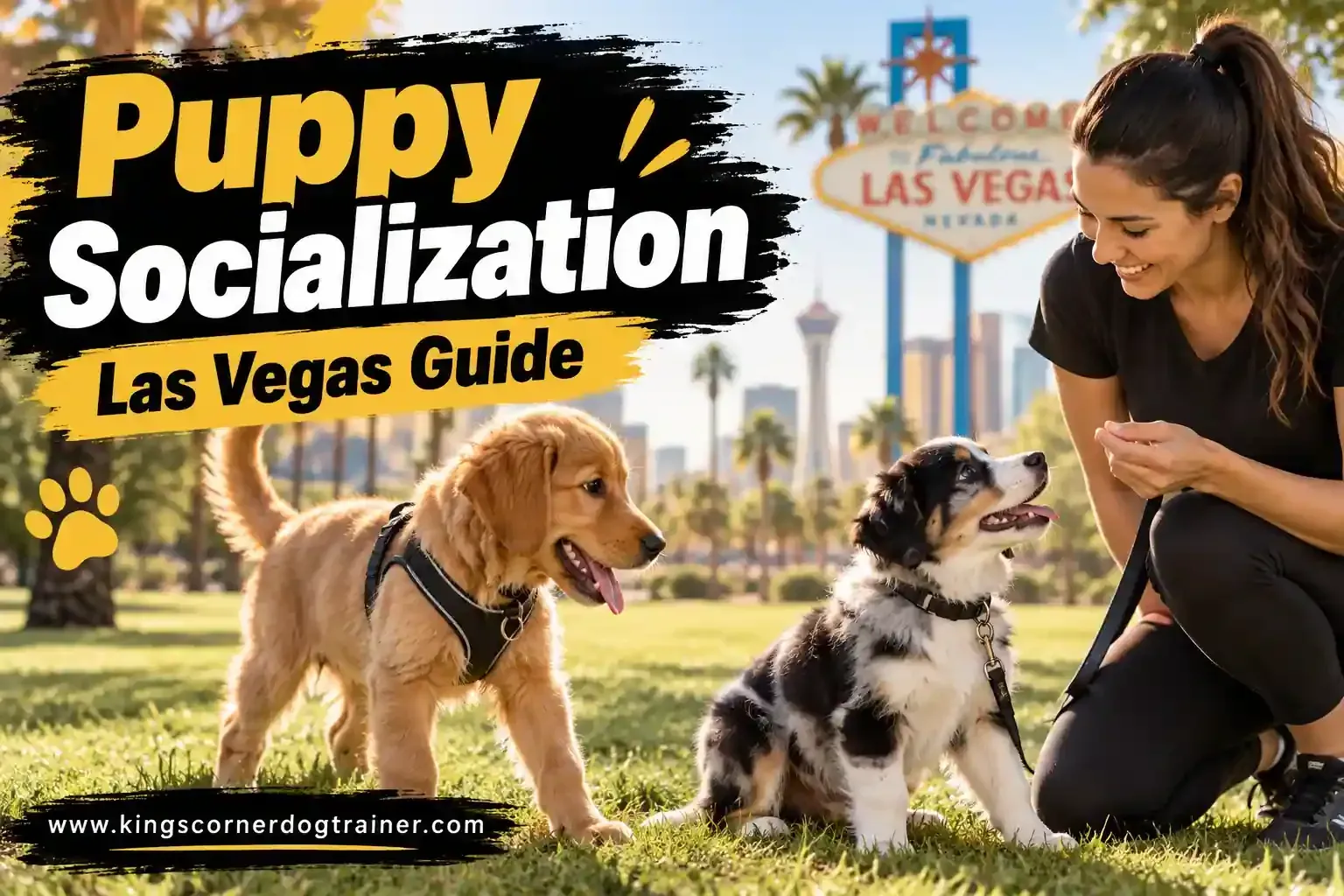
Bringing home a new puppy is exciting, but raising a confident, well-adjusted dog takes more than food, toys, and basic commands. One of the most important parts of early puppy development is socialization.
Puppy socialization in Las Vegas means safely introducing your puppy to the people, dogs, sounds, surfaces, environments, and everyday situations they are likely to encounter throughout life. The goal is not to make your puppy interact with everything. It is to help them learn that new experiences can be safe, predictable, and positive.
The first few months are especially important. The American Veterinary Society of Animal Behavior identifies the first three months of a puppy's life as the most important socialization period and recommends safe exposure to different people, animals, environments, and stimuli during this stage.
What Is Puppy Socialization?
Socializing a puppy is the process of helping your puppy become comfortable around everyday experiences before those experiences become frightening or overwhelming.
Good socialization can include meeting different types of people, calmly seeing other healthy dogs, walking on unfamiliar surfaces, hearing household noises, riding in a vehicle, being gently handled, and visiting new environments.
Socialization does not mean putting your puppy into a crowded dog park and hoping they figure things out. Quality matters more than quantity. A few calm, positive experiences are far more valuable than many stressful ones.
A properly socialized puppy should gradually learn to notice something unfamiliar without immediately becoming frightened, overly excited, or difficult to control.
When Should You Start Socializing a Puppy?
If you are wondering when to socialize a puppy, the answer is usually as early as it can be done safely.
The first three months are particularly important for social development. Puppies can begin learning about their environment even before completing their entire vaccination series. AVSAB states that appropriately managed puppy classes can begin as early as 7 to 8 weeks when puppies have received the recommended initial veterinary care.
However, vaccination needs vary by puppy. AAHA vaccination guidelines recommend a series of core vaccinations throughout puppyhood, and your veterinarian should determine when specific activities are appropriate based on your puppy's age, vaccination status, lifestyle, and local disease risks.
Before taking a young puppy into areas frequently visited by unfamiliar dogs, speak with your veterinarian.
How to Socialize a Puppy Safely
Learning how to socialize a puppy begins with controlling the intensity of each new experience.
Introduce one or two unfamiliar things at a time rather than overwhelming your puppy. Keep enough distance from the new person, dog, sound, or object that your puppy can remain relaxed.
Use treats, praise, play, and gentle encouragement to build positive associations. Reward-based methods are particularly important during puppyhood because your puppy is learning how to interpret the world around them. AVSAB recommends reward-based methods for dog training and behavior work.
Watch your puppy carefully. If they are backing away, hiding, freezing, repeatedly trying to escape, refusing treats, or becoming highly agitated, increase the distance or end the experience.
Safe puppy socialization should build confidence, not force a puppy to tolerate something frightening.
Introduce Your Puppy to Different Types of People
Your puppy should gradually learn that people can look, sound, smell, and move differently.
Introduce your puppy to adults, children when safely supervised, people wearing hats, people carrying bags, people using mobility equipment, delivery workers, and visitors entering your home.
Do not require your puppy to greet every person.
Instead, allow your puppy to observe people from a comfortable distance. Reward relaxed behavior. If your puppy chooses to approach someone calmly, the person can gently interact with them.
Teaching a puppy that they can calmly exist around strangers is just as important as teaching them to enjoy greetings.
Help Your Puppy Learn Appropriate Dog-to-Dog Behavior
Meeting other dogs is an important part of puppy behavior training, but the dogs your puppy meets should be chosen carefully.
Start with healthy, vaccinated dogs that are known to be calm and appropriate around puppies. A gentle adult dog can sometimes teach a puppy more appropriate social skills than an uncontrolled group of excited puppies.
Avoid pushing your young puppy into crowded, uncontrolled dog environments. AVSAB specifically advises avoiding highly trafficked dog areas that cannot be adequately sanitized when puppies are still developing immunity.
Structured puppy socialization classes in Las Vegas can provide a more controlled opportunity for learning when the program carefully manages puppy interactions and health requirements.
Introduce Everyday Las Vegas Sounds and Environments
Las Vegas can be a stimulating environment for a young dog. Cars, motorcycles, construction noise, delivery vehicles, busy sidewalks, shopping areas, bicycles, doorbells, and crowds can all be unfamiliar to a puppy.
Start at a distance.
For example, instead of immediately walking your puppy beside heavy traffic, sit somewhere quieter where your puppy can hear vehicles without becoming overwhelmed. Give treats for calm observation.
Gradually work toward busier environments as your puppy becomes more confident.
This process helps create positive environmental exposure rather than simply flooding your puppy with stimulation.
Practice Different Surfaces and Objects
Puppies sometimes become nervous about unfamiliar things under their feet.
Give your puppy opportunities to safely experience carpet, tile, grass, concrete, gravel, mats, ramps, and other stable surfaces.
You can also introduce ordinary objects such as umbrellas, boxes, bicycles, rolling luggage, trash containers, vacuums, and grooming equipment.
Keep introductions gradual. Allow your puppy to investigate rather than pushing them toward an object.
These simple exercises can become useful puppy socialization tips because they prepare your puppy for situations they may encounter at groomers, veterinary clinics, boarding facilities, public spaces, and unfamiliar homes.
Get Your Puppy Comfortable With Handling
Socialization also includes physical handling.
Your puppy will eventually need veterinary examinations, nail trims, grooming, brushing, ear checks, and possibly medication.
Practice gently touching your puppy's paws, ears, mouth, collar, legs, and body. Keep sessions short and pair handling with rewards.
If your puppy becomes uncomfortable, reduce the intensity.
This creates a positive foundation for future grooming and veterinary care while teaching your puppy that being handled does not automatically mean something unpleasant is about to happen.
Adjust Socialization for the Las Vegas Heat
The Las Vegas climate requires an additional layer of planning.
During extreme summer heat, outdoor socialization sessions should be scheduled carefully. The City of Las Vegas advises keeping pets indoors during the hottest hours, especially between 10 a.m. and 6 p.m., and recommends walks early in the morning or after sunset. Hot pavement can also injure paw pads.
That means puppy training in Las Vegas does not always need to happen outdoors.
Indoor training, short vehicle trips, visits to appropriate pet-friendly environments, supervised home visits, handling exercises, sound exposure, and controlled puppy training classes in Las Vegas can provide valuable experiences without unnecessary heat exposure.
Always provide fresh water and watch closely for excessive panting, weakness, drooling, vomiting, or other signs of overheating.
Combine Socialization With Basic Puppy Training
Socialization and obedience work best together.
Simple skills such as name recognition, sit, come, leash walking, leave it, and calm attention give you ways to communicate with your puppy during new experiences.
For example, if your puppy sees another dog, rewarding them for calmly looking back at you can prevent excitement from escalating into pulling or barking.
This is why puppy obedience training Las Vegas programs can be particularly useful. Your puppy is not only learning commands. They are learning how to respond to you while distractions are present.
Consider Professional Puppy Socialization Classes
A qualified dog trainer in Las Vegas can help owners understand whether a puppy is curious, nervous, overstimulated, or genuinely fearful.
Group training can also provide controlled practice around other puppies and people. Kings Corner Dog Trainer LLC offers group dog training where dogs can practice skills and socialization in a structured environment. The company also provides in-home training and behavioral services for owners who need more individualized support.
Professional Las Vegas dog training can be especially useful if your puppy is extremely shy, highly excitable, struggling around dogs, or developing unwanted behaviors during social situations.
Common Puppy Socialization Mistakes
One of the biggest mistakes is trying to expose a puppy to too much too quickly. Another is believing every puppy must greet every dog or person they encounter.
Punishing a puppy for showing fear can also make the problem worse. Instead, create distance, lower the difficulty, and reward calm behavior.
Do not wait for your puppy to become older before introducing normal household experiences. At the same time, do not ignore veterinary guidance about disease exposure.
Successful socialization requires finding the right balance between behavioral development and physical safety.
Building a Confident Puppy Takes Consistency
Puppy socialization Las Vegas owners can practice does not require complicated outings every day. Small experiences matter.
A short training session near a quiet sidewalk, meeting one friendly visitor, calmly hearing a vacuum, practicing paw handling, walking across a new surface, or observing another dog from a comfortable distance can all contribute to your puppy's development.
The key is keeping experiences positive and progressing at your puppy's pace.
If you want help creating a structured plan, Kings Corner Dog Trainer LLC provides puppy training Las Vegas families can use to develop better manners, confidence, communication, and real-world skills. Professional guidance can help you build good habits early instead of trying to correct preventable behavior problems later.
Frequently Asked Questions About Puppy Socialization
What age is best for puppy socialization?
The most important socialization period occurs during approximately the first three months of life. Safe exposure should begin early while following your veterinarian's recommendations regarding vaccination and disease risk.
Can I socialize my puppy before all vaccinations are finished?
Socialization does not necessarily need to wait until the entire puppy vaccination series is complete. Controlled experiences can begin earlier, but high-risk areas should be avoided. Speak with your veterinarian about what is appropriate for your puppy.
Should I take my puppy to a dog park for socialization?
A dog park is generally not the best place for early puppy socialization because you cannot control the health status, temperament, or behavior of every dog present. Controlled interactions and well-managed puppy classes are safer options for many young puppies.
What if my puppy seems afraid during socialization?
Do not force interaction. Increase the distance from whatever is worrying your puppy and reward relaxed behavior. Puppies showing significant or persistent fear should be evaluated by an appropriate veterinary or behavior professional.
Are puppy socialization classes worth it?
A properly managed class can help puppies practice being around other dogs, people, distractions, and new experiences while owners learn effective training techniques. Look for structured classes that emphasize appropriate interactions and humane training methods.